
5 ways Mental Health Advocates support BVSD students
Tools parents and caregivers can use at home
7 min read
- Key points:
- Nationwide, teens are facing a mental health crisis.
- Boulder Valley School District and Impact on Education have partnered to support mental and emotional wellness in six high schools.
- School district Mental Health Advocates encourage students by offering processing support, teaching students coping skills, and staffing tech-free, calming spaces.
- Advocate Emma Olsen offers actionable mental health and emotional regulation tips for families below.
National trends
It’s undeniable that teens have more mental distress than ever before. National data reflects what many families are already feeling.
- 40% of high school students in 2023 reported persistent feelings of sadness or hopelessness.1
- 20% said they had seriously considered attempting suicide.1
- 55% of parents say they are extremely or very concerned about teen mental health.2
How BVSD and Impact on Education are responding
The Boulder Valley School District and Impact on Education are taking an innovative approach by building mental and emotional wellness into the school day. A team of Mental Health Advocates (MHAs) work inside six high schools through dedicated Wellness Centers.
Unlike school counselors, who manage large caseloads and responsibilities ranging from academic planning, social and emotional health, and college and career support, MHAs focus exclusively on supporting student mental, social, and emotional health. MHAs don’t provide therapy, but instead offer a safe space and teach students coping skills.
5 strategies caregivers can use at home
Here are five ways Mental Health Advocates support Boulder Valley students, along with ideas families can use at home:
1) Build a toolbox of coping skills
Wellness Centers are not only places to talk. They are places to learn and practice coping skills and resilience.
MHAs introduce simple, repeatable tools that help students regulate in the moment. That might include breathing exercises like box breathing or coherent breathing, stretching, fidget tools that stimulate the vagus nerve, or grounding techniques.
“Having good mental health is a learned skill that needs to be taught and practiced,” said Emma Olsen, an MHA at New Vista High School. “I think as adults we sometimes forget that we need to show young people how to cope with stress and uncertainty.”
In the Wellness Centers, students learn how to notice what is happening in their bodies and choose a strategy that helps them reset.
Try this at home: When your child is overwhelmed or stressed, help them learn what tools and behaviors help. Try asking, “What usually helps your body feel calmer?” If they’re not sure, brainstorm together. A hot shower. A short walk. Music. A repetitive motion like rolling a bead in their hand or a yoga sequence. Build a short list of go-to tools and practice them before a crisis hits.
2) Create a tech-free “pause” in the day
For many teens, life includes a constant stream of notifications, group chats and social media. Wellness Centers give students a place to step out of that noise and practice being present in their bodies.
“In the Wellness Room we connect and process together rather than through technology,” said Emma.
When students come in upset, Emma helps them slow down instead of reaching for their phones. She notices changes in breathing or posture and names them. “I noticed your breathing changed. What’s happening in your body right now?”
With the help of MHAs, students learn to identify what they are feeling, regulate their bodies and respond thoughtfully rather than spiral.
Try this at home: Give technology structure instead of eliminating it. Keep devices, including TVs and video games, out of bedrooms at night to protect sleep. Look at screen time together and model your own limits. Help the young people in your life notice how technology affects their mood, focus and rest.
3) Identify safe “third spaces” and intentionally build community
Wellness Centers are not classrooms and they are not home. They are designed as a third space, a low-pressure environment where students can walk in and be themselves.
“All kids need spaces where they do not have to perform, compete or mask how they are feeling,” said Emma. “When they experience belonging in a setting like that, resilience grows.”
MHA’s intentionally build that belonging through regular, low-stakes check-ins so students can stop by even when nothing is wrong. They also create shared activities that lower social pressure, such as coloring mandalas while talking, working on puzzles or knitting side by side.
“All kids need spaces where they do not have to perform, compete or mask how they are feeling,” said Emma. “When they experience belonging in a setting like that, resilience grows.”
Belonging is not confined to the Wellness Center walls. During Pride at New Vista High School, Emma hosts identity tables where students can choose flags that represent them and learn about affinity groups where they can find community. At suicide prevention events, students sign awareness ribbons and take part in open, honest conversations about mental health.
Try this at home: Jot down a list of third spaces you find inviting. Enlist family and friends to do the same and make a plan to make time to enjoy those spaces. When talking with kids, this might look like encouraging them to participate in a sport or a club and scheduling time on the family calendar to be on the field or in the art studio.
4) Protect sleep and keep food neutral
Modern students are struggling physically, said Emma. Some are sleeping with phones on through the night. Others are skipping meals or getting stuck in anxious thinking about food and exercise. Before deeper problem-solving can happen, MHAs help students reconnect with their bodies.
That may mean asking direct questions about sleep, looking at screen time reports together, making sure kids are eating and reframing food as fuel rather than something to control.
Try this at home: Treat sleep and food as nonnegotiable foundations, not side conversations. Keep devices out of bedrooms at night. As a family, talk about food in terms of energy your body needs rather than how it impacts appearance. Model this yourself. When teens see adults protecting their own sleep and speaking neutrally about nourishment, it reinforces that caring for the body is foundational for good mental health.
5) Normalize check-ins and process feelings out loud
Many teens are skilled at appearing “fine,” even when they are struggling. MHAs work to gently interrupt that pattern by teaching students how to name what they are feeling and move through it in healthy ways.
In Wellness Centers, students practice processing emotions both one on one and in small groups. They learn to slow down, identify what is happening in their bodies and put language to big feelings. The goal is not to eliminate stress. It is to build skills they can use the next time stress shows up.
Emma encourages adults to create regular opportunities for check-ins and to model emotional processing in real time. When young people see adults reflect honestly, it gives them permission to do the same.
Try this at home: Make reflection visible. Instead of only asking your child how they are doing, share your own process. “I slept badly last night and I can feel it today, so I’m going to try going to bed earlier.” The next day, close the loop. Let them see that managing stress is ongoing, imperfect, and human.
The community investment behind student wellness
Last school year:
- 2,897 high school students made 31,281 visits to Wellness Centers.
- About 1 in 3 students with access to a Wellness Center used the space.
- 6 Wellness Centers staffed by Mental Health Advocates were funded to support students.
- Students using Wellness Centers reported higher connection to their school community and access to trusted adults.
- Students using Wellness Centers had fewer disciplinary actions and risk factors for substance use.
The Wellness Centers, and the Mental Health Advocates who staff them, are funded by Impact on Education, the nonprofit foundation supporting the Boulder Valley School District. Community donations make it all possible.
For Emma, the impact is visible in the small, steady moments.
“I didn’t have anything like this when I was in high school,” she said. “There has to be a better way than waiting until things fall apart. If students can walk in here on a good day or a bad day and know they belong, that matters.”
The goal is not to eliminate stress. It is to help students build the tools, relationships and self-awareness that allow them to move through it.
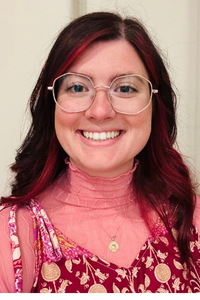
Emma Olsen, MHA at New Vista High School
“Having good mental health is a learned skill that needs to be taught and practiced,” Emma said. “I think as adults we sometimes forget that we need to show young people how to cope with stress and uncertainty.”
- https://www.pewresearch.org/internet/2025/04/22/teens-social-media-and-mental-health/
- https://www.cdc.gov/children-mental-health/data-research/index.html
BEFORE YOU GO
Impact on Education is an independent nonprofit supporting the Boulder Valley School District. We depend on the generosity of our community to put our mission into action.
Will you help us provide opportunities and resources to local students?


