For Boulder High senior Audrey Bahintchie, serving on the Student Advisory Board for BVSD afforded her the opportunity to represent students of color and immigrants and serve her community.

Audrey was born in the Ivory Coast, in West Africa, and speaks French as her first language with English as her second. She is also working on mastering sign language. She said that as an only child, she has a myriad of hobbies to fill her time but spends a lot of her time doing community service.

Besides the Student Advisory Board, Audrey is also in the Black Student Alliance, the Youth Opportunity Board, Rotary Club, and Zonta International, a service organization focused on the rights of women worldwide.

“A lot of my extracurricular activities have an aspect of community service and are related to my core values: diversity and inclusivity,” she said. “I really strive for trying to make a change. After high school, I plan to go to college to get a degree in psychology and medicine. I want to become a family physician.”

 “I really strive for trying to make a change. After high school, I plan to go to college to get a degree in psychology and medicine.”

Audrey Bahintchie, Senior at Boulder High School

The future Dr. Bahintchie said her experience on the Student Advisory Board was valuable and remembered advising the BVSD School Board that students need counseling that goes beyond academics.

“Once, we talked about how we feel about reaching out to our counselors in our school and I said that I don’t feel comfortable reaching out to them because we’ve been taught to look at them as academic counselors and not someone you go to with emotional baggage or if you’re feeling some type of way,” she said.

Audrey added that emotional and therapeutic counseling is needed all the time for students and not just after a national tragedy such as the fatal King Soopers shooting in Boulder.

“Although we came together after that and the counselors were there to help us, I asked that the school district acknowledge that we have counselors to help us with our emotions around these big events like the shooting, but that service isn’t available to us as regularly as it should be,” she said.

Audrey said her time on the Student Advisory Board during the COVID-19 pandemic has shown her how considerate leaders and administrators must be of all perspectives and situations before making a decision.

“It’s really hard to try to see how inclusive you can be and take all the different types of situations and scenarios under consideration and how changing one thing could affect everyone,” she explained. “I definitely gained a respect for our administration and how difficult it can be to decide what happens within our school system. It shows how much of an impact students can establish and enforce when they talk with trusted adults and mentors so we can create a better atmosphere for all of us.”

“I definitely gained respect for our administration and how difficult it can be to decide what happens within our school system.”

Audrey Bahintchie, Senior at Boulder High School

Besides getting her degree in medicine and psychology, Audrey also hopes to continue advocating for her communities. She will be attending CU Boulder in the fall.
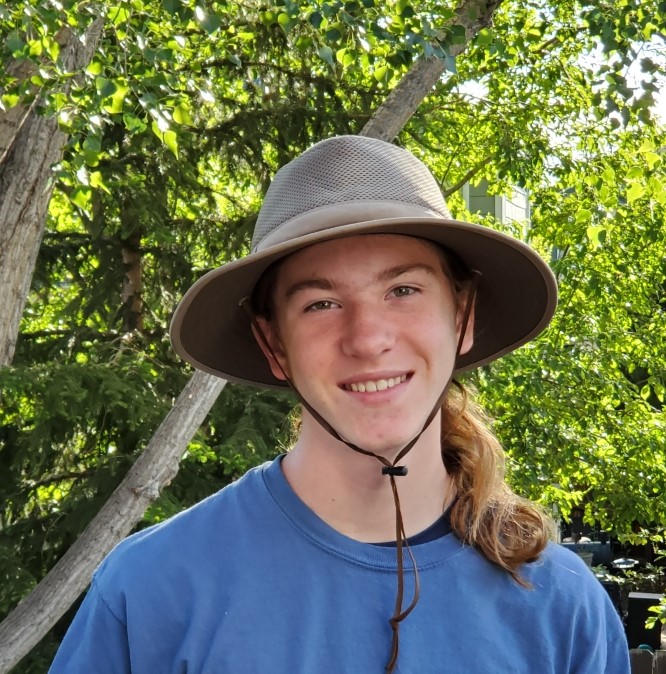
As an up-and-coming Boulder politico, Jasper Brockett felt advising the BVSD School Board was the perfect chance to further hone his public speaking and advocacy experience.

To him, it is an extension of one of the country’s founding principles: the people affected by big decisions should get a say in how those decisions are being made. Jasper was working on a municipal effort to allow 16- and 17-year-old Boulderites to vote in school board elections, but there was a change to the state constitution that killed the possibility of that measure.

As the son of a couple heavily involved in the Boulder community, perhaps it was natural for Jasper to follow in his parents’ footsteps and become politically engaged. His father, Aaron Brockett, is a member of the Boulder City Council, and his mom, Cherry-Rose Anderson, serves as the Assistant Treasurer and Civil Engagement Chair for the local chapter of the National Association for the Advancement of Colored People (NAACP).

Jasper said his parents did a great job of encouraging him to explore and expand his interest in debate, policy and public speaking.

“There’s never a rule without a reason with them and if you can come up with a good enough reason that the rule shouldn’t exist, then the rule can shift and change,” Jasper said. “Like when I wanted to get my learner’s permit when I was 15, I had to come up with a debate with evidence as to why it wasn’t a terrible idea.”

Jasper said that during his three years on the Student Advisory Board, he has enjoyed seeing his fellow students find their voices. He recalled that in his second year on the Board, they had an open discussion with BVSD stakeholders about curricula. Over the years, school board members and other district leaders are coming to the Student Advisory Board more for specific feedback.

“That’s a big shift. At first we just threw it at them and hoped it would stick, and now they’re coming to us and asking questions.”

Jasper Brockett, Senior at Boulder High School

“Last year we had that conversation, and we gave feedback to the board unprompted, and this year they came back to (Impact on Education Executive Director) Allison Billings and said ‘We want the feedback again and here’s specifically what we want their views on,’” Jasper explained. “That’s a big shift. At first we just threw it at them and hoped it would stick, and now they’re coming to us and asking questions.”

Jasper said that he would recommend any student who feels like they aren’t being heard to apply to the SAB.

“If any student has opinions and thoughts they feel aren’t being heard, it would definitely be worth looking into the board to see what it feels like,” he said. “I know for a lot of my fellow board members, it helped them put their thoughts and feelings out in a space where they will be listened to.”

Perhaps surprising no one, Jasper plans to study political science at CU Boulder in the fall. He is also open to learning other skills he is passionate about.

“I plan to broaden my skills in order to open up pathways that I might want to connect with,” he said. “I’m going to look into culinary school at some point, and I know CU has a good mixology certificate you can get when you turn 21. So I’m just trying to build skills that I find interesting and that I could build a career with.”

By Karen Antonacci

Abby Cohen knew she was an opinionated Fairview High student, so when the opportunity arose to advise the Boulder Valley School District board, she jumped at the chance.

“I’ve always said that the school district needs to listen to the students more, and I always felt kind of frustrated like we don’t really have much of a voice. Then the Student Advisory Board came along and it was perfect,” she said.

Abby is a senior this year and started on the SAB her junior year. She said she enjoyed advocating for curriculum changes within the school district, specifically making sure high school students receive unbiased civics classes.

“It’s so important, especially right now, to understand politics even if you’re not interested in it. It’s really an important component to being a contributing member of society,” Abby explained. “And Boulder is a very liberal place, and if kids are not learning about those topics in school, they are getting it from their parents and their friends and only getting one opinion in the Boulder Bubble. I think that only getting one side to everything is really dangerous.”

“I’ve always said that the school district needs to listen to the students more, and I always felt kind of frustrated like we don’t really have much of a voice. Then the Student Advisory Board came along and it was perfect.”

Abby Cohen, Senior at Fairview High School

Abby remembered a pre-COVID town hall that the Student Advisory Board members attended with other BVSD stakeholders about curricula.

“There were so many parents and educators and staff, and we were the youngest people in the room. Everyone was kind of blown away like ‘Woah, why are you guys here?’” she said. “We are the ones that the decisions actually affect, so that was really cool to be able to talk to people and share our experience and have them say ‘Oh, I didn’t even know that.’”

The SAB had to shift their focus to helping the school district transition everyone online during the pandemic, but Abby is hopeful that the next cohort can refocus on the curriculum evaluation work. 

She said being a high school senior during COVID-19 was tough, but her college-level criminal justice class at the Boulder TEC kept her sane.

“I’m not doing in-person classes at Fairview because I don’t see the point for myself really. Sometimes it is easier for me to learn at home and part of me is glad to not have to be in high school every day. But I think I would go crazy if I wasn’t going in person to any sort of school at all,” she said.

Abby is very interested in criminal justice and will be studying justice and law at American University in Washington, D.C. in the fall.

“I definitely would like to become a lawyer, and so law school might be in the future for me, but I’ve got to finish undergraduate first,” she said.

By Karen Antonacci

Noah Mollerstuen officially became an adult just two weeks before he will graduate from Boulder High. Before he reached either of those milestones, however, Noah helped the Boulder Valley School District leadership navigate an unprecedented pandemic.

Noah was convinced by his friend and fellow Student Advisory Board member Jasper to join the board and ended up serving for three of his four high school years.

“It seemed like a pretty good opportunity to get some leadership experience and help improve the school district,” he said. “I signed up not knowing what to expect, but I’ve stuck with it and it has been a great community these last three years.”

Noah said he was proud to be a part of the Student Advisory Board’s work, especially giving the School Board feedback on how to remedy inequities in public education and close the opportunity gap for historically disadvantaged groups of students.

“Inequality is a pretty major issue in the Boulder Valley school district, so my work with the Board will allow me to be a bit more aware of those problems in the future and how I impact them and how they impact me,” he added.

Those gaps became starkly apparent when the COVID-19 pandemic forced students into virtual education. The Student Advisory Board’s work on civic engagement had to be put on pause to work within the school district and with nonprofit organizations such as Impact on Education to make sure each student had the equipment and technology they needed to succeed.

“I signed up not knowing what to expect, but I’ve stuck with it and it has been a great community these last three years.”

Noah Mullerston, Senior at Boulder High School

COVID also fundamentally changed the way students experienced high school this year. Noah said for him, he was able to weather the pandemic as he is an introverted online native anyway, but he noticed the social effects of not seeing his peers in person everyday.

“It was definitely hard to keep in touch with friends that I didn’t know as well. The number of friends I had probably decreased while I intentionally kept contact with people I know well,” he said. “Like the people you would just say hi to in the hallway, you don’t see any more.”

Luckily, Noah’s other hobbies adapted well to meeting people online or distanced. Besides the Student Advisory Board, he also spends his time on his school’s Robotics Club and was able to keep playing tennis with friends. He serves on the board of management for his church, the First Congregational Church of Boulder. In his free time, Noah likes to play board games and video games.

Noah received a J. Perry Bartlett college scholarship and will study computer science and robotics at Case Western Reserve University in Ohio this fall.

Overall, he said that he would recommend other BVSD students consider serving on the Student Advisory Board to broaden their perspective. “I’m definitely glad I’ve been on the board. It has been pretty interesting to see the different perspectives that the people from the different schools are bringing to the table,” Noah said. 

We’re offering a forum for our Student Advisory Board members to share their voice through guest blog posts. These views and opinions do not necessarily represent those of Impact on Education.

Reflecting on the Centaurus High School Lockdown

By James Clemson

On Wednesday, March 3, 2021, just before 10 a.m, Centaurus High School went into lockdown after a teacher thought they heard gunshots fired within the school. The school was in lockdown for roughly 3 hours while police searched the building before, thankfully, it was declared a false alarm. Afterward, Centaurus returned to normal operations. 

The swift response of multiple police departments demonstrated BVSD’s good planning and the dedication of our local law enforcement to keeping kids safe. However, the emotional aftermath of such an event highlights some areas for improvement.

One student perspective

As a Centaurus student myself, I have friends and family who were in the building at the time of the lockdown, although I was fortunately learning remotely at the time. 

One 9th grade student I know was outside the building, studying with friends, when the report came in. Her first impression that something was very wrong came when a police woman pulled up with a large gun and talked to a staff member outside. The staff member then yelled at the students to “RUN!” She and her friends ran to a nearby gas station, unsure where to go or what was happening. She admitted that it was mostly adrenaline that kept her moving and a sense that the decisions she made could very much be life or death. Arriving at a friend’s house, they reached out to family and peers in the building and over the course of an hour and a half, started to learn what had been going on at the school. 

After Centaurus announced that they would be returning to normal activities, this student and her friends returned, still understandably distraught. Classes were half empty, and in those that remained, teachers and students didn’t talk about the events of the morning. She said it felt like a sort of group denial. Personally shaken, she felt the need to work through her feelings before she could return to her classes. Although trauma counselors had been made available, information on when and where to seek these resources was scarce, and announcements that it was ok to leave school if that was needed were late in coming. All in all, this student felt that Centaurus’s emotional and trauma support was “too little too late”.

Better guidance

In an age where school shootings are an all too common possibility, and especially in light of the recent mass shooting at the King Soopers in Boulder, it is important to have a plan. The events on March 3rd demonstrated the strength of BVSD’s lockdown procedure but also made clear some weaknesses, and it is important to learn from this experience to make students feel as safe as possible in their schools. 

As this 9th grader pointed out, she would have known what to do, were she in the classroom, thanks to numerous drills. But outside, with her only direction being “RUN,” she was left largely on her own to make decisions that could have meant life or death. Better guidance on safe spaces near a school, and how to get to them, would have been very helpful, according to this student. Furthermore, the actual event is not the whole issue. 

Emotional support

The emotional fallout requires better guidance and communication from the school. BVSD has many exceptional mental health resources, as a district and through partnerships with the community. Beyond school counselors, which form the backbone of BVSD’s student support systems, community partnerships with Mental Health Walk in Crisis Clinc, Colorado Crisis Services, Community Reach Center, National Suicide Prevention Lifeline, and Mental Health Partners are all intended to provide needed mental health services

While these are important and impactful, it is also vital that information about how to access them, as well as more traditional school counselors, is made readily available, so that students can easily find the support they need. This should be done in a clear, direct manner, be it through the PA system, teachers, or whatever other method is deemed most effective at reaching students. 

Events like these can not be ignored; they must be acknowledged. Even if it was a false alarm, the experiences and emotions of those involved are very, very real, and should be addressed as such. I hope BVSD takes the events of March 3 as a chance to reflect and improve and make school safer and more supportive for everyone.

James Clemson is a junior at Centaurus High School, where he plays for the school’s JV soccer team. He is part of the IB Diploma Program and on Impact on Education’s Student Advisory Board.

Premier Members Credit Union is passionate about supporting education in our community. Growing from a small financial institution serving teachers in the Boulder Valley School District, to one that serves tens of thousands of members throughout Colorado and nationwide, they recognize the importance of financial literacy and responsibility as a critical educational tool.

Bringing banking to high schools

In 2009, PMCU partnered with Boulder High School to open the Panther Student Credit Union. Their partnership offered unique and valuable hands-on learning experiences for students to dip their toes into the world of finance and business. After the initial success of the Panther Student Credit Union, Premier Members created similar programs in three other high schools in the Boulder Valley School District. In 2010, Fairview High School launched the Knight Student Credit Union, and Monarch High School launched the Coyote Student Credit Union, while Centaurus High School opened the Warrior Student Credit Union in 2011. Each of these credit unions are primarily student run with oversight from Premier Members’ team members.

The student experience

High school students are recruited in the spring to work at their school’s respective credit union for the following academic year. After completing two training sessions at a Premier Members branch during the summer, students are equipped with the skills needed to run their school’s credit union. Each student receives similar training to the professional tellers in Premier Members’ branches.

“Promoting financial literacy, and operating the high school branches exemplifies Premier Members’ commitment to building lasting relationships that strengthen the communities that we serve. Providing educational opportunities and supporting the financial literacy of our youth is a staple of the “Premier” experience.”

Susan Finesilver, AVP Community Relations at Premier Members Credit Union

While school is in session full-time, students working at their school branches are well-equipped to independently operate the credit union. Students are responsible for setting up daily, managing the cash box, helping members and prospective members with their accounts, and working with confidential information. Student interns receive both an hourly wage and elective business credits throughout the school year.

Real-world financial skills

Each student working at a student credit union engages with real-world personal finance situations during their high school experience, allowing them to build financial literacy in a safe and structured environment.

All student members develop money management skills and come to understand the importance of saving for the future. They gain experience managing their own debit card and checking account and finding appropriate ways to establish and maintain good credit for future use. Not only do student interns successfully learn financial management skills, they experience committing to a position for an extended period of time. The students get to experience being professional and working with a business in a structured and secure environment. They develop unique cash handling skills as they deposit money into different accounts with larger transactions while keeping member information confidential. In addition to the cash handling skills, students learn and use other bank teller skills, as well.

“The student interns are learning critical skills that are applicable to anyone, not just those interested in finance.”

Steve Carr, Student Branch Liaison at Premier Members Credit Union

This is a rigorous program that both requires and instills student commitment and responsibility. Students leave the program with a toolkit full of self-initiative, responsibility, and critical financial and business skills. While it is not required, students often stay with the credit union until they graduate, and train younger students for their position.

The next step for Premier Members’ student credit unions

When schools shuttered due to the coronavirus pandemic, the four student-run credit unions were forced to temporarily close as well. Premier Members is exploring ways to relaunch the program amidst our new high school environments.

We’re offering a forum for our Student Advisory Board members to share their voice through guest blog posts. These views and opinions do not necessarily represent those of Impact on Education.

A Teenager’s Journey to Connect Through Letter Writing

By Emery Jansen

The past year has been horrific in countless ways; tragedies hit all communities one after the other, and it has been challenging to keep ourselves afloat. In the beginning, there was an aura of surrealism that encapsulated everyone. It was an enjoyable kind of unprecedented fun even. No one we knew had COVID in those first few weeks when everyone learned how to make double- and triple-layered masks; it was just an extended spring break and a hefty dose of dysregulation. Signs reading, “We will get through this together,” and “This too shall pass,” littered our cities and social media feeds. Unfortunately though, those days of pandemic glory wore off quickly; this still has not passed. The past year has been one of distance and each-man-for-himself sentiments; more than 12 months in and some self-entitled citizens still refuse to consider someone, anyone, other than themselves. 

Despite these collective grievances and our own individual sufferings, not everything was negative. In March of 2020, I found myself grappling with the loss of my life as I knew it, as all of us did. Everything was unknown, and I spiraled as the uncertainties around me swept me up with them. As a member of the generation deemed conceited and overly-absorbed in the online world, I sat in a resounding inability to feel, to connect, to do anything other than simply survive. I’m sure many of my peers can attest to this: even those who weren’t textbook-compliant with the various COVID mandates and were still socializing felt the shift. By chance, I came upon an opportunity to keep myself afloat and, as I found out later, cultivate intimate relationships with those who compose my world.

My letter-writing empire began on March 29, 2020, when a friend of mine got an envelope in the mail, covered in haphazard, pen-drawn hearts. It was sent by one of their friends wanting to bring a smile to the faces around her. I contemplated this occurrence for a while, realizing just how grateful I would be and important I would feel if someone did the same for me, even with simple communication. So, I determinedly drafted a list of 13 people to write to, pen on paper, a stamp in the upper-righthand corner, the whole lost art of letter writing. I wrote my favorite memories I shared with each person, lamented about what I would miss the most about them in our time apart during lockdown (unfortunately, I am still missing these traits of the people I love). I asked them questions about what we would typically be discussing in-person. Twelve out of those original 13 letters arrived at their destinations, the vast majority bound for friends and teammates, though two meandered their way to Wisconsin with my cousins’ names on them. The last was vacuumed into the space-time continuum and still hasn’t been delivered.

Now, almost exactly one year since I wrote my first letters, I have sent and received over 200 letters, with a group of people who have morphed only slightly since 12 months ago. I wrote letters to my best friend daily, passed a travel-destination list back and forth with other friends, traded music suggestions, laughed at terribly embarrassing anecdotes, stared in wonderment at my friends’ calligraphy talent, became acquainted with my aunt as the human she is, reconnected with a middle school friend to support her through intense tragedy, tantalizingly listed the most arbitrary tidbits about myself, learned more about friends I’ve made recently, and, most regrettably, stamped and sent an unfortunately colorful letter to my crush at the time. I wish I were kidding on the last one. However, all the others sent me running to the mailbox almost daily in hopes that I would find a response waiting for me. This may sound cheesy, a 16-year-old writing letters to stay connected when there are virtual ways to communicate instantly, but I have found this lost art to be the epitome of what I need right now: an unmatched opportunity to express myself creatively, encouragement to stay patient, and finally, an ability to ground myself in the present and in found moments to forget the world’s realities of the past year.

About the author

Emery Jansen is a junior at Fairview High School and a member of our Student Advisory Board. She is passionate about all things creative–including embroidery, photography, drawing, writing, and running her own business. Emery is also a vehement advocate for social justice and mental health awareness, valuing the connections she holds with those around her more than everything else in her life.

We’re offering a forum for our Student Advisory Board members to share their voice through guest blog posts. These views and opinions do not necessarily represent those of Impact on Education.

A New Pandemic: Teen Overdoses

By Abby Cohen

As we approach the one-year mark of the nationwide COVID-19 lockdown, a new pandemic is coming to light: the opioid crisis. Obviously, this is nothing new to any American. Drug overdoses have been a major cause of death among citizens for years. But in Boulder County, an alarming and abnormal number of opioid overdoses among teens in our community have occurred within the last few months.

Teen overdoses in Boulder County

On February 6th, Boulder County released an article warning of fentanyl-laced Xanax and Oxycodone pills, two drugs popular among recreational users. Even without coroner reports for recent teen deaths, there is substantial evidence that laced drugs are circulating the streets of our county.

The only way to reverse an opioid overdose is by using a drug called Narcan, also known as Naloxone. This drug is easy to use; it’s administered by nasal spray. However, Narcan is expensive and often requires more than one dose to revive someone. Narcan can be provided by pharmacies for free to someone with Medicaid, but it tends to cost around $120 if bought at a pharmacy. This makes Narcan hard to obtain. Local rehabilitation facilities such as Natural Highs offer free Narcan and training on how to use it. This is an amazing aid to our community, but it still doesn’t reach everyone at risk for drug overdoses. 

How BVSD can address the opioid crisis

I’m confident drug overdoses among my fellow teens would decrease if there were a location where BVSD students could anonymously pickup Narcan for free. A petition was started by a Colorado high school student to require schools to provide students with Narcan, drug testing strips, and training sessions on how to assist someone who is overdosing. At the time of the writing of this blog, the petition has 4,819 signatures.

4,819 is more students than the total enrollment of Boulder High School and Fairview High School combined. Clearly, there’s a consensus among my peers and me that change is necessary, but I’m concerned this petition won’t be enough to make change.  

In order for this petition to create positive change, we need the support of BVSD educators and parents.

If the people paying taxes to fund the schools demand change, the district is much more likely to listen. We need more parents, teachers and staff sharing and signing this petition, and we need them to communicate their complaints directly to the schools and to our district leaders. Every voice makes a difference, as we cannot afford to lose another classmate due to drugs, when we have the power to save them.

Abby Cohen is a graduating senior at Fairview High School and a member of Impact on Education’s Student Advisory Board.

Last year, we kicked off a partnership with Couragion, a locally owned software company working to inspire underrepresented students to pursue science, technology, engineering and mathematics (STEM) careers. This women-led company uses an online platform to provide inclusive, work-based learning experiences that introduce students to jobs of the future.

The Couragion pilot program

We proposed a pilot program to the Boulder Valley School District (BVSD) to implement Couragion in order to meet the district’s career and technical objectives. Our goal was to see if this new software could more precisely align with these objectives than the Career Pathways program, an in-house mentorship program helping elementary students explore careers. Working with Arlie Huffman, Director of CTE Education for BVSD, and Katie Romero, Director of Student Support for BVSD, we were able to launch the program in the fall of 2020.

Who participated in the pilot

We targeted five BVSD middle schools for the Couragion pilot program to reach a cross-section of schools representing various geographies, academic environments, and socioeconomic demographics. Their school counselors received training in September 2020, and then their students received access to the platform for eight weeks. 

4,580 career “quests” were completed by students throughout the program, with each student completing an average of 4.1 quests. 

Initial findings

Students were surveyed each time they used Couragion, and the program showed an increased knowledge of STEM careers and school resources. The pilot results include:

Lessons learned

The student participants demonstrated self-awareness, critical thinking and a broadened knowledge of career possibilities:

Some students also focused on a specific career goal:

What’s Next

The goals of this pilot program extend beyond career exposure to impact on course selection and the perception of how STEM classes can lead to careers. With our partners at BVSD, we are now evaluating next steps to determine if we should continue to offer Couragion to BVSD middle schoolers in the 21-22 school year and how we might deploy it most successfully in the future.

We recently shared the story of Earl and Barbara Bolton, announcing the $500,000 endowment they left to Impact on Education. Today, we’re excited to share the details of our newest college scholarship opportunity for Boulder Valley students, the Earl and Barbara Bolton Scholarship, and two other scholarships available to BVSD high school seniors. 

All seniors who meet the eligibility criteria are encouraged to apply. These scholarships are only available to BVSD students.

All three scholarships are accepting applications now through April 18, 2021.

Earl and Barbara Bolton Scholarship

This $5000 scholarship is renewable for up to four years ($20,000). Applications are accepted from BVSD graduating seniors who demonstrate financial need, have an acceptance letter to a Colorado college (2-or 4-year) or university, and plan to pursue engineering, forestry, nursing, or medicine.

Born in 1920 and 1924 respectively, Barbara and Earl both grew up in Boulder County — Barbara in the City of Boulder and Earl in the City of Longmont. The pair met in grade school but fell in love while attending Boulder High School.

Earl was a distinguished Army veteran, and Barbara was the first draftswoman for Boeing.The couple settled in Boulder and worked with the National Bureau of Standards (now known as the National Institute of Standards and Technology), until retiring together in 1980. They dedicated much of their lives to aviation, education, and travel, and were both driven to give back to those in need.

Review the full eligibility requirements or the scholarship application.

Dennie & Donna Wise Scholarship

This $1,000 scholarship is renewable for up to two years ($2,000). Applications are accepted from BVSD graduating seniors planning to pursue a vocational, technical or community college education (full or part-time).

Dennie Wise, a former Impact on Education board member, established a scholarship fund in his wife Donna’s name upon her death. He wanted to help BVSD graduating students access community college and trade school by offering a scholarship to students who choose to pursue post-secondary education at a vocational, technical, or community college. When Dennie passed away, his children contributed to the scholarship fund and requested the scholarship name be updated to honor both parents.

Review the full eligibility requirements or the scholarship application.

Gould-Foothill Scholarship

This $1,500 scholarship is offered to two graduating seniors (one male, one female) who have attended both Boulder High School and Foothill Elementary and plan to pursue elementary education.

James B. Gould and Bernice W. Gould left Impact on Education this scholarship endowment to aid Boulder High School students seeking to become elementary school educators. 

Review the full eligibility requirements or the scholarship application.

Connect with Us

Subscribe to our Newsletter

* indicates required

info@impactoneducation.org
303.524.3865

Impact on Education
721 Front Street, Suite A
Louisville, CO 80027

Tax ID #84-0943046